

GNN SOLUTIONS / SELECTED WORK
Sage Accounting API integration for a bespoke ERP
We connected a custom ERP to the full Sage Business Cloud Accounting API, so invoicing, credit notes, customers and month-end reporting run themselves.
Web design & development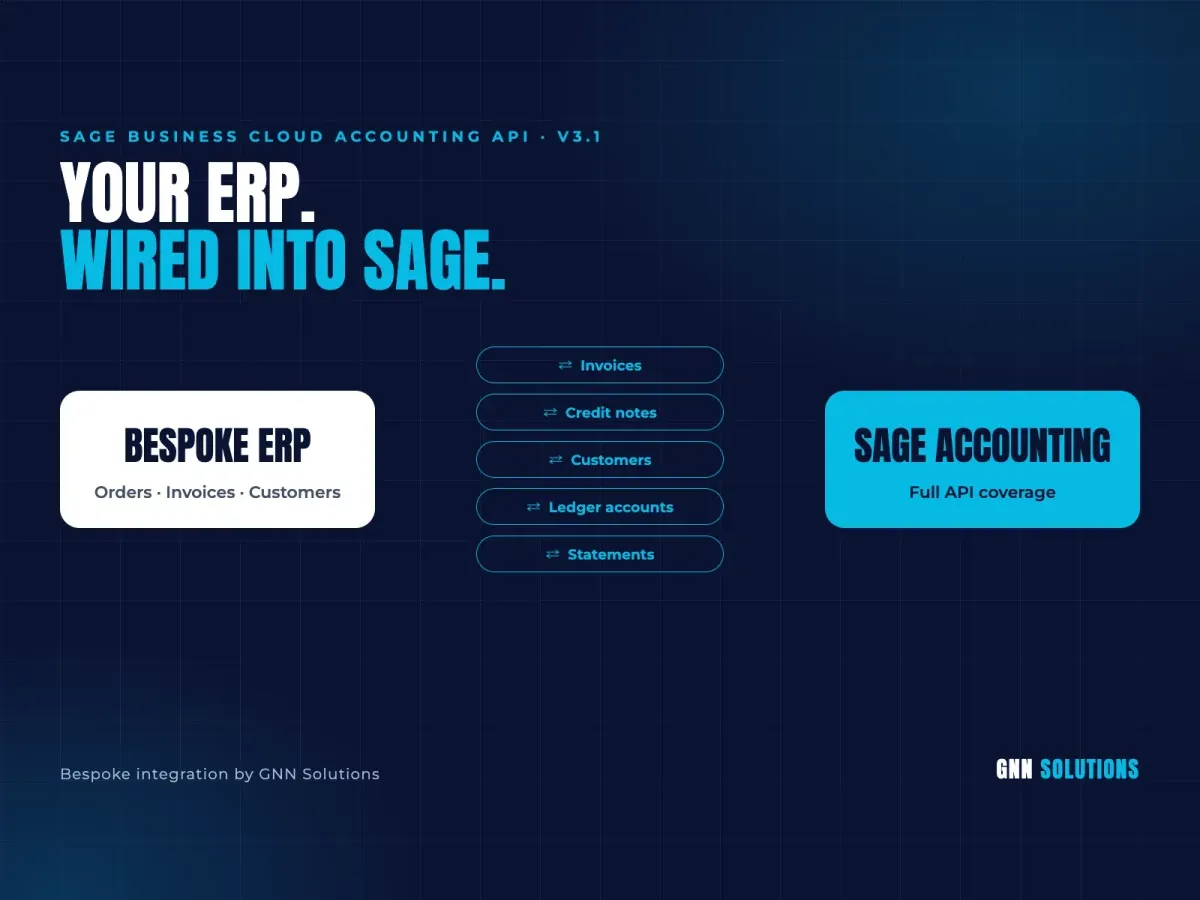
Accounting is where a growing business quietly loses hours. Invoices raised in one system, re-typed into another. Credit notes chased by email. Customer details that drift out of step. Month-end reporting that takes days because nobody trusts the numbers until they have been checked by hand.
We built a custom ERP for a client, and the next step was clear. It needed to talk to Sage properly. A one-way export or a handful of connected endpoints would not do. The client needed a complete Sage Accounting API integration that lets the ERP and Sage work as one system.
The challenge
The business already ran its operations through our bespoke ERP, while its books lived in Sage Business Cloud Accounting. Every invoice meant double entry. Every credit note meant finding the original invoice, recreating it in Sage and applying it by hand. Statements and summaries were built manually at the end of each month.
The brief was simple. Take the repetitive accounting work away, keep Sage as the single source of truth for the accounts, and keep the ERP as the place where the team actually works.
What we built
We implemented the entire Sage Business Cloud Accounting API (v3.1), following the official documentation endpoint by endpoint, so every function the API offers is available inside the ERP. That includes:
- Invoice management in both directions. Invoices raised in the ERP are pushed to Sage, and changes made in Sage flow back to the ERP.
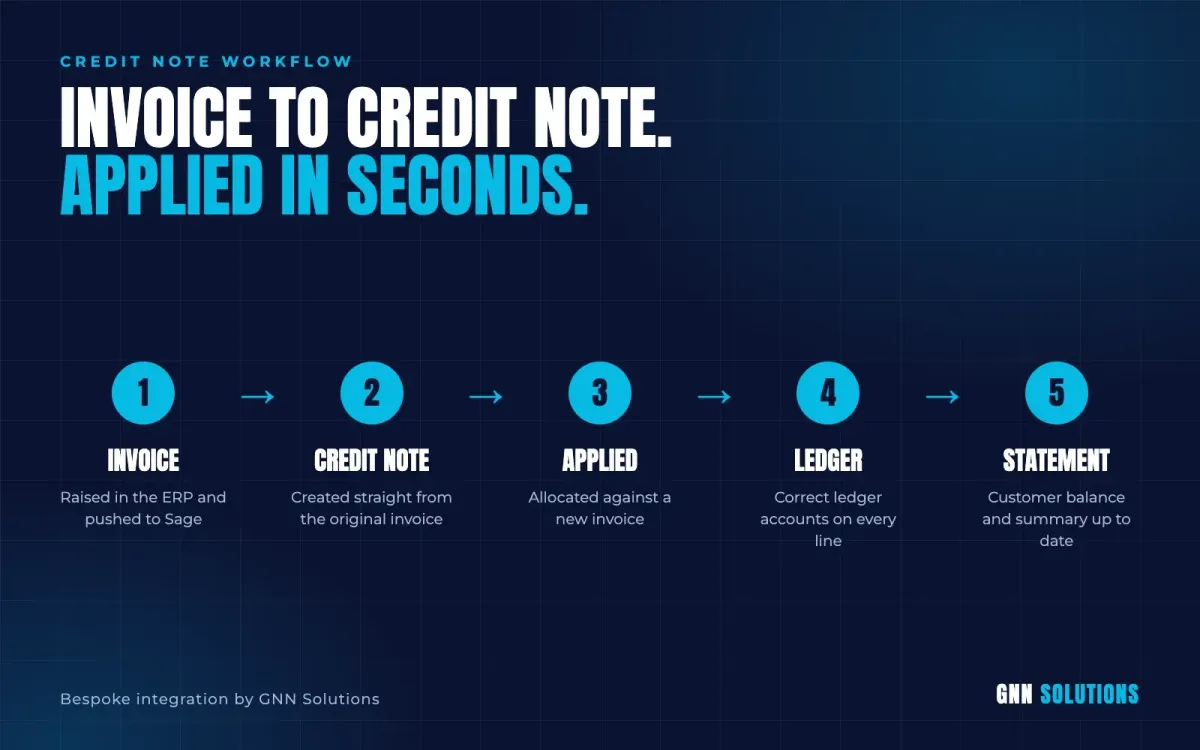
- Credit notes from invoices. A credit note is created straight from the original invoice, with the lines already in place.
- Applying credit notes to new invoices. Credit is allocated against a fresh invoice in a couple of clicks, and both systems stay in agreement.
- Account statements and summaries. Customer statements and account summaries are produced from live Sage data, with no spreadsheets in between.
- Ledger account management. Ledger accounts are set on every line item and invoice, so the books are coded correctly the first time.
- Customer management. Customers are created and updated once and stay consistent across the ERP and Sage.
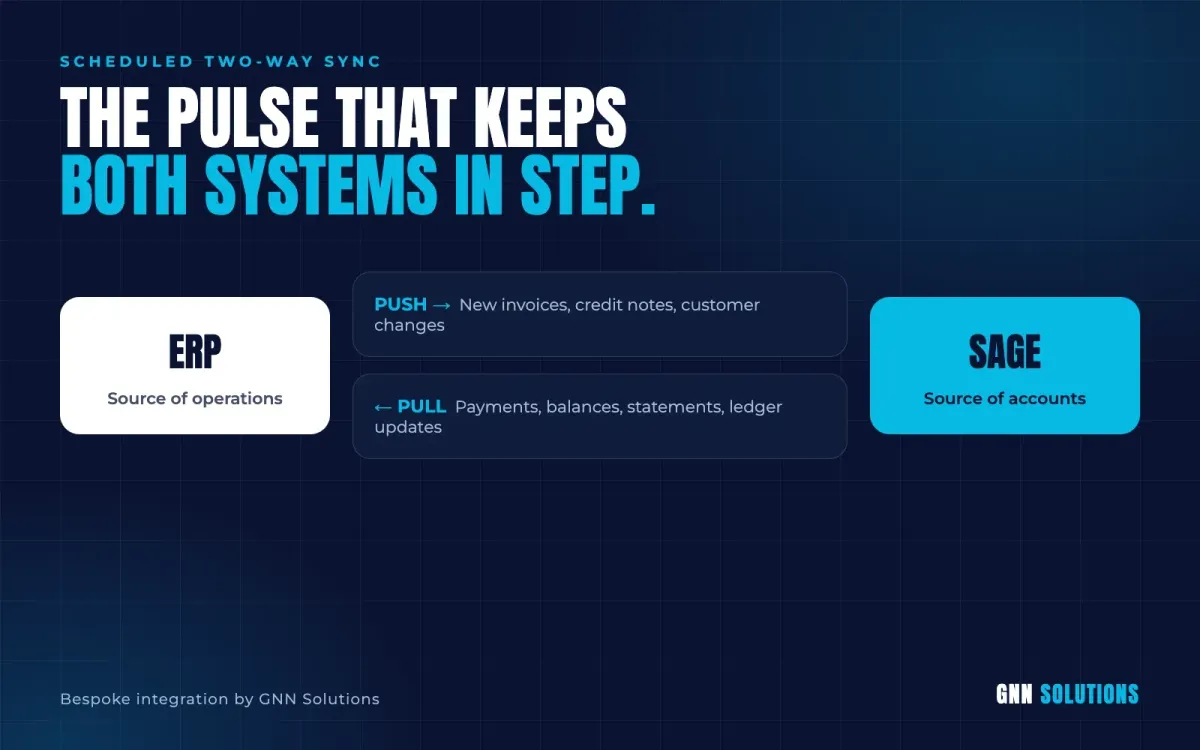
The pulse: keeping both systems in step
Behind the screens sits a scheduled sync we call the pulse. It pushes new and changed records from the ERP to Sage, and pulls payments, balances, statements and ledger updates back. Because the integration covers the whole API, there are no gaps where someone has to step in and copy data across.
The result
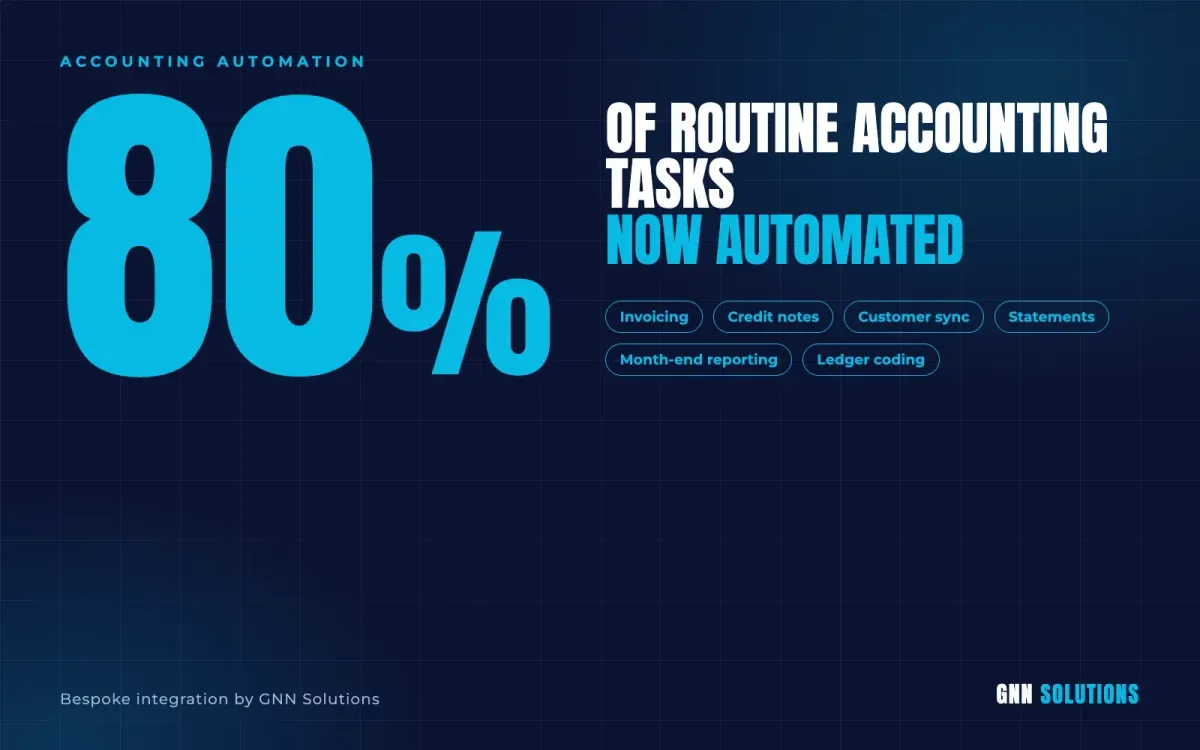
The integration now handles around 80% of the accounting tasks the team used to do manually. Invoicing, credit notes, customer updates and end of month reporting that once took many hours each week now happen in the background. The finance team spends its time reviewing and making decisions, rather than typing figures into a second system.
Sage API integration, built properly
Off the shelf connectors cover the basics. If your invoicing, stock, jobs or customer processes are specific to your business, a bespoke Sage API integration lets the software follow your process, rather than the other way round. We build and support custom ERP systems, CRM platforms and API integrations for businesses across Chester, Cheshire and the UK.
Want your own systems connected to Sage?
If your business runs on a system that should be talking to another one, we can build that connection properly. Tell us what you have in mind or book a call and we will talk it through with you.
THE DETAILS / IN FOCUS
KEEP EXPLORING
MORE GOOD WORK.MORE POSSIBILITIES.

YOUR NEXT CHAPTER
YOUR PROJECTCOULD BE NEXT.
Tell us about your business, what you need and where you want to go. We’ll help you work out the right next step.
Start a conversation